Dog Ring Holder 3d Print
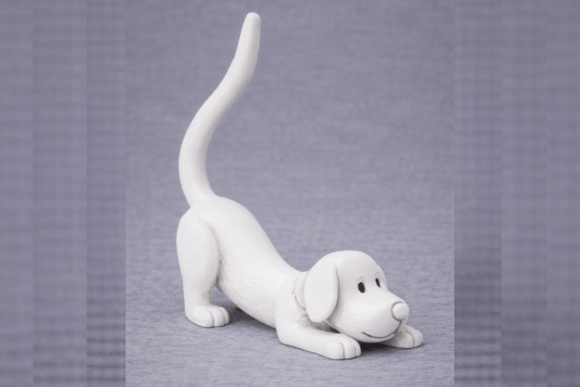
The intersection of functional organization and personal expression has never been more accessible than it is today, thanks to the rapid evolution of additive manufacturing. Among the myriad of objects that can be brought to life from digital files, niche accessories like the Dog Ring Holder 3d Print offer a unique blend of utility and charm. This specific design transforms a mundane task—placing your wedding band or engagement ring on a bedside table—into a moment of whimsy. Instead of risking the loss of valuable jewelry in dark crevices or down drains, this model provides a dedicated, safe resting place shaped like a dog’s tail.
At its core, this object is not just a trinket; it is a testament to the flexibility inherent in 3D printing technology. The design allows users to move beyond static, mass-produced items and into the realm of personalized creation. Whether you are looking for a subtle addition to your nightstand or a vibrant conversation starter, the ability to manipulate the source file means the final product can align perfectly with your aesthetic preferences and practical needs. For many, the appeal lies not just in the end result, but in the process of bringing a digital concept into the physical world.
Why Different Audiences Care About Customizable Jewelry Storage
To understand the true value of a Dog Ring Holder 3d Print, one must look at how different groups of people interact with both jewelry storage solutions and 3D printing technology. For the average consumer, the primary concern is often simplicity and reliability. A ring holder needs to be stable enough to support the weight of a ring without tipping over, yet small enough to fit comfortably on a crowded dresser. The dog tail design achieves this by providing a curved surface where the ring can sit securely, reducing the anxiety associated with misplacing expensive items.
For interior design enthusiasts and hobbyists, the focus shifts toward aesthetics and integration. Mass-market ring holders often come in generic shapes or colors that may clash with existing decor. However, because this model is a 3D printable file, the color palette is virtually limitless. You are no longer restricted to what is available on store shelves. This freedom allows homeowners to match the holder to their bedding, wall paint, or other decorative accents, creating a cohesive visual narrative in their personal spaces.
Furthermore, for those who view home decor as an extension of their personality, this item serves as a thoughtful gift option. It bridges the gap between a practical necessity and a sentimental gesture. Giving someone a ring holder shaped like their favorite breed—or simply a playful animal form—shows attention to detail and care. It is a gift that acknowledges the recipient’s daily habits while adding a touch of humor and warmth to their routine.
Evaluating Material Choices and Printing Flexibility
The beauty of 3D printing lies in the material science behind it. When you decide to print a Dog Ring Holder 3d Print, you are making critical decisions about durability, texture, and appearance. The default behavior of most slicer software will produce a result based on the filament chosen, but these choices significantly alter the final character of the piece.
- PLA (Polylactic Acid): This is the most common material for beginners due to its ease of use and wide variety of colors. PLA offers a matte finish and good dimensional accuracy, making it ideal for showcasing the intricate details of the dog’s tail. However, it is less heat-resistant, meaning it should not be left in hot cars or near direct sunlight for extended periods.
- ABS (Acrylonitrile Butadiene Styrene): For those needing a more durable option, ABS provides greater impact resistance and thermal stability. It has a slightly glossier finish when polished and is suitable for environments where the object might experience more wear and tear. The trade-off is that it requires higher printing temperatures and better ventilation due to fumes.
- Metal Filaments and Resins: Advanced users with compatible printers can explore metal-filled filaments or UV-curable resins. Metal-filled PLA, for instance, can be sanded and polished to achieve a metallic sheen, allowing you to create a holder that looks like solid brass or silver. Resin printing offers superior detail resolution, which is crucial if the dog model features fine fur textures or expressive facial features.
These material options mean that the same digital file can yield vastly different physical outcomes. A beginner might start with a bright blue PLA to test the print settings, while a professional creator might opt for a translucent resin to capture light in a way that highlights the curves of the design. This variability ensures that the project remains relevant regardless of your technical skill level or equipment capabilities.
Customization: From Desktop Showpiece to Art Piece
One of the most compelling aspects of this model is the ease with which it can be resized and recolored using 3D slicer software. The ability to adjust the scale opens up creative possibilities that extend far beyond simple functionality. If you desire a subtle, discreet holder, you can scale it down to fit neatly beside a smartphone charger. Conversely, if you want to make a statement, scaling it up transforms it into a larger statue or desktop showpiece that commands attention.
Color customization further enhances this versatility. By utilizing multi-color extruders or manually changing filaments during the print, you can create gradient effects that mimic natural fur patterns. Imagine a holder that transitions from a deep brown at the base to a lighter tan at the tip, simulating the natural shading of a real dog’s coat. Alternatively, you might choose bold, contrasting colors to create a fun, toy-like appearance suitable for children’s rooms or play areas.
However, customization requires balance. While it is tempting to experiment with complex color schemes, over-colorization can sometimes obscure the fine details of the model. The success of the print often depends on letting the geometry speak for itself. Using solid, high-quality filaments often yields the best results, allowing the lighting in the room to highlight the contours of the tail rather than competing with busy patterns. This principle applies whether you are printing for yourself or producing multiple units for sale.
Practical Applications for Creators and Small Businesses
For entrepreneurs and makers, the Dog Ring Holder 3d Print represents a low-risk entry point into the market for personalized goods. Because the initial investment is limited to filament costs and printer time, testing the market demand is inexpensive. Small business owners can offer customization services, such as engraving names on the base or selecting specific breeds, thereby increasing the perceived value of the item.
Educators and students can also utilize this model as a teaching tool. It demonstrates concepts in mechanical engineering, such as load-bearing structures and center of gravity, by analyzing why the tail shape effectively holds a ring. In art classes, it serves as a case study in digital sculpting and the translation of 3D models into physical objects. Students learn to troubleshoot print failures, optimize infill density for strength versus weight, and understand the properties of different polymers.
Ultimately, the value of a Dog Ring Holder 3d Print is defined by the user’s intent. It is a simple object that invites creativity, encourages responsible jewelry handling, and celebrates the joy of making. Whether used as a functional tool, a decorative accent, or a learning exercise, it exemplifies how modern technology can enhance everyday life with personal touches. By understanding your own goals and constraints, you can tailor the printing process to create something that is not only useful but deeply satisfying to own.