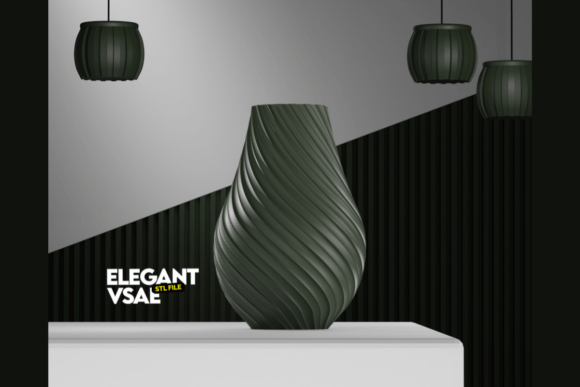
Evaluating the 3D STL Elegant Spiral Vase for Modern Interior Design and 3D Printing Projects
The intersection of functional decor and digital fabrication has created a unique niche for home enthusiasts who value both aesthetics and customization. Among the growing array of available designs, the 3D STL Elegant Spiral Vase stands out as a compelling option for those seeking to introduce organic, flowing forms into their living spaces or office environments. This design is not merely a container for flowers; it represents a specific approach to geometric beauty that leverages the capabilities of modern additive manufacturing.
For individuals aged 20 to 50 who are actively researching home decor solutions, understanding the nuances of this particular STL file is essential. It offers a distinct alternative to mass-produced ceramics or glassware, providing a level of personalization and structural intrigue that traditional retail items often lack. However, choosing to print such an object involves considerations regarding material selection, printing technology, and post-processing effort. This analysis explores the characteristics of the Elegant Spiral Vase, compares it against standard decorative alternatives, and helps determine whether this digital asset aligns with your specific design goals and technical capabilities.
Understanding the Design Philosophy of the Spiral Form
At its core, the 3D STL Elegant Spiral Vase is defined by its helical geometry. Unlike cylindrical vases that rely on uniformity, this design utilizes a twisting motion that creates dynamic visual interest from every angle. The spiral structure serves a dual purpose: it acts as an artistic statement piece and provides structural stability through its interlocking form. When rendered in three dimensions, the negative space created by the twists allows light to interact with the object in complex ways, casting intricate shadows that change throughout the day.
This aesthetic appeal is particularly relevant in contemporary interior design trends, which favor minimalism combined with sculptural elements. The vase can function as a standalone sculpture even when empty, making it versatile for various settings. Whether placed on a minimalist desk in a home office or on a side table in a living room, the elegant curve adds a touch of sophistication without overwhelming the surrounding space. The design’s adaptability makes it suitable for both FDM (Fused Deposition Modeling) and resin (SLA/DLP) printing, though the final appearance will vary significantly depending on the chosen method.
Comparing Printing Technologies: FDM vs. Resin
One of the most critical decisions for anyone acquiring this 3D Printable STL File is selecting the appropriate printing technology. The choice between FDM and resin printers directly impacts the realism, finish, and durability of the final product.
- FDM Printing: For those using filament-based printers, the spiral vase presents a fascinating challenge and reward. The layer lines inherent in FDM printing can actually complement the spiral design, emphasizing the twist and creating a textured, ribbed effect. This approach is cost-effective and allows for the use of durable materials like PLA, PETG, or ABS. However, achieving a smooth surface requires significant post-processing, including sanding and priming. Additionally, large spiral structures may require supports if the overhangs are steep, adding to the cleanup time.
- Resin Printing: Users with SLA or DLP printers can achieve a near-perfect surface finish right off the build plate. The high resolution of resin printers captures the fine details of the spiral curves, resulting in a smooth, porcelain-like appearance that closely mimics traditional ceramic vases. This method is ideal for users who want a "gallery-ready" look with minimal post-processing. The trade-off is the higher cost of resin materials and the need for careful handling due to the brittleness of cured resin parts.
When evaluating these options, consider your primary goal. If you enjoy the hands-on process of finishing and painting, FDM offers a satisfying creative journey. If you prioritize immediate visual polish and fine detail, resin is the superior choice. Both methods successfully bring the 3D STL Elegant Spiral Vase to life, but they cater to different user preferences and skill sets.
Material Considerations and Functional Limitations
While the aesthetic qualities of the spiral vase are undeniable, practical functionality must also be weighed. As a digital model intended for home or office decor, it is important to understand the material properties of common 3D printing filaments and resins.
Standard PLA, while popular for its ease of use, has a relatively low heat resistance. Placing hot water in a PLA-printed vase could lead to warping or deformation. For functional use involving water, PETG or ASA are better alternatives due to their improved thermal stability and moisture resistance. However, even with these materials, long-term submersion may cause issues if the print is not properly sealed. Many users choose to apply a waterproof epoxy coating or polyurethane varnish to ensure the vase is leak-proof and durable enough for fresh flowers.
Furthermore, the open nature of the spiral design means that water retention depends entirely on the wall thickness and the seal quality of the print. In some cases, the gaps between the spiral layers might allow water to seep out if not printed with sufficient infill density or wall perimeters. Therefore, slicing settings play a crucial role. Increasing the number of top and bottom layers, along with optimizing the wall count, ensures that the vase is watertight. This technical adjustment is a key factor in deciding whether the 3D STL Elegant Spiral Vase is suitable for your intended use case.
Alternatives and Contextual Fit
To make an informed decision, it is helpful to compare the 3D STL Elegant Spiral Vase with other common decor options. Traditional ceramic vases offer proven durability and ready-to-use functionality but lack the unique geometric complexity of a 3D printed object. They are also static in design, whereas a 3D printed vase can be scaled up or down, modified, or even reprinted in different colors to match changing interior themes.
Another alternative is buying generic plastic or metal vases from retail stores. These are inexpensive and immediately available but often suffer from poor design quality and environmental concerns related to mass production. The 3D printed route, while requiring upfront time and equipment investment, results in a bespoke item that reflects personal taste and supports sustainable manufacturing practices by producing only what is needed.
For users who do not own a 3D printer, services like Shapeways or local print farms offer a middle ground. You can download the STL file and have it professionally printed, eliminating the technical barriers while still enjoying the custom design. This option is particularly appealing for those who view the vase as a gift rather than a DIY project. The versatility of the digital file allows it to be shared easily among friends and family who appreciate modern design.
Decision Factors: Is This the Right Choice?
Selecting the 3D STL Elegant Spiral Vase depends largely on your priorities regarding aesthetics, effort, and budget. It is an excellent choice for individuals who:
- Value Unique Aesthetics: If you want a conversation piece that differs from standard store-bought decor, the spiral form offers a striking visual impact.
- Enjoy Customization: The ability to choose materials, colors, and scales allows for a highly personalized end product.
- Have Access to Printing Resources: Whether owning a printer or using a service, having access to additive manufacturing is necessary to realize the design.
Conversely, this option may not be suitable if you need a heavy-duty, commercial-grade vase for high-traffic areas where durability is paramount, or if you prefer zero-maintenance decor items. Additionally, if you are new to 3D printing and unwilling to learn about slicing parameters and post-processing, the learning curve might be steeper than desired.
Conclusion
The 3D STL Elegant Spiral Vase represents a sophisticated blend of art and engineering. Its graceful form and adaptability make it a standout addition to any modern interior. By carefully considering printing technologies, material properties, and personal capabilities, users can determine if this digital asset fits their needs. Whether used as a centerpiece for dried botanicals or as a sculptural accent on a workspace shelf, the spiral vase offers a tangible connection to the world of digital design. It empowers homeowners to curate their environments with precision and creativity, proving that 3D printing is more than just a manufacturing tool—it is a medium for expressive decoration.