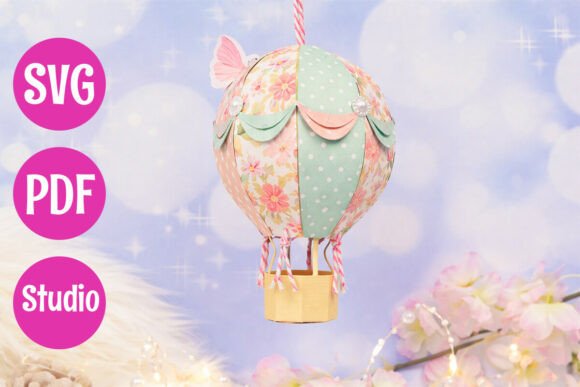
Evaluating the 3D Hot Air Balloon: A Comprehensive Guide to Layered Paper Crafts
The world of digital crafting has evolved significantly, moving beyond simple flat cutouts into complex, multi-dimensional structures that offer a tactile and visual depth previously difficult to achieve with standard printer paper. Among these innovations, the 3D Hot Air Balloon stands out as a particularly versatile and charming project. It is not merely a static image but an engineered assembly of layered components designed to create volume, shadow, and movement. For crafters, decorators, and event planners aged 20 to 50 who are constantly seeking ways to elevate their handmade creations, understanding the nuances of this specific design format is crucial for making informed purchasing and usage decisions.
This article provides a detailed evaluation of the 3D Hot Air Balloon template, exploring its structural integrity, compatibility with modern cutting machines, and ideal use cases. By comparing it to traditional two-dimensional decor and other forms of paper engineering, readers can determine whether this resource aligns with their technical skill level and creative goals.
Understanding the Architecture of Layered Paper Designs
At its core, a 3D Hot Air Balloon project relies on the principle of layering. Unlike a single-piece cutout that lies flat against a wall or surface, this design utilizes multiple SVG (Scalable Vector Graphics) layers that are stacked to create depth. Each layer typically represents a different part of the balloon structure—the basket, the burner, the envelope (the fabric part), and decorative elements like ribbons or flags.
The distinct advantage of this approach is the interplay of light and shadow. When assembled correctly, the gaps between layers cast subtle shadows, giving the illusion that the balloon is floating rather than stuck to a background. This adds a significant "wow" factor to nursery decor, party backdrops, and gift presentations. However, this benefit comes with increased complexity in preparation and assembly compared to simpler designs.
Technical Specifications and File Formats
For a project to be successful, the digital files must be precise. The typical package for a high-quality 3D Hot Air Balloon includes several key formats:
- SVG Files: These are vector-based files essential for cutting machines like Cricut and Silhouette. They allow for infinite scaling without loss of quality, ensuring that whether you are making a small table decoration or a large wall installation, the lines remain crisp.
- PDF Files: Included for users who prefer manual cutting with scissors or craft knives. These serve as printable templates with clear outlines.
- Studio Files: Specifically formatted for Silhouette Studio, often containing pre-set cut lines and material settings, which streamlines the workflow for experienced users of that specific ecosystem.
When evaluating such products, it is important to verify that the file includes clean layers. Poorly organized layers can result in tangled cut lines or confusing assembly instructions, leading to frustration. A well-designed template will have clearly named layers and intuitive fold lines, reducing the learning curve for beginners while offering enough precision for advanced crafters.
Comparative Analysis: 3D vs. Traditional Decor
To understand the value proposition of the 3D Hot Air Balloon, it is helpful to compare it against alternative decoration methods commonly used for baby showers, birthdays, and nursery themes.
Flat Wall Decals vs. Layered Structures
Traditional wall decals are quick to apply and require no assembly. They are cost-effective and provide a flat, graphic look. However, they lack physical presence. In contrast, a 3D paper craft offers texture and dimension. While it requires more time investment—potentially 30 to 60 minutes per unit depending on complexity—it results in a centerpiece that draws attention from multiple angles. For a themed party where photos are taken from various perspectives, the 3D option provides superior photographic appeal.
Pre-made Plastic Decorations vs. Handmade Paper Crafts
Store-bought plastic balloons and hanging ornaments are durable and reusable. Yet, they often feel generic and mass-produced. Handmade paper crafts, such as the layered hot air balloon, offer a personalized touch that resonates emotionally with recipients. They signal effort and care, making them ideal for gifts. Furthermore, paper allows for customization in color palettes and materials (e.g., using metallic foil paper or textured cardstock), whereas plastic options are limited by manufacturer inventory.
Digital Downloads vs. Physical Kits
One critical distinction in the current market is the difference between digital downloads and physical kits. The 3D Hot Air Balloon described here is a digital product. This means there is no shipping wait time, and the cost is generally lower than physical kits. However, it places the burden of material sourcing on the buyer. You must provide your own cardstock, glue, and cutting machine access. For those who already own a Cricut or Silhouette, this is a negligible tradeoff. For absolute beginners without tools, the barrier to entry is higher, though not insurmountable if one considers borrowing equipment or visiting a local library makerspace.
Evaluation of Use Cases and Best-Fit Scenarios
Not every project requires a three-dimensional structure. Understanding when to deploy a 3D Hot Air Balloon ensures that your time and resources are spent effectively.
Ideal Applications
- Nursery Decor: The soft, rounded shapes of a hot air balloon pair well with pastel color schemes common in nurseries. The 3D aspect makes it engaging for infants looking at mobile-like structures, provided it is hung safely out of reach.
- Baby Showers and Birthdays: As a photo booth prop or a backdrop element, these balloons add verticality to flat walls. They can be clustered together to form a "sky" effect.
- Creative Gifts: A miniaturized version can be placed in a shadow box or attached to a greeting card, adding a surprise element of depth.
- Educational Displays: For classrooms discussing geography, travel, or physics (buoyancy), these models serve as excellent visual aids that students can assemble themselves.
Limited Suitability
It is less suitable for outdoor events where wind could damage the delicate paper layers, unless protected under glass or acrylic. Additionally, for large-scale commercial installations requiring hundreds of units, the assembly time may become prohibitive compared to printing large-format banners.
Decision Factors: Is This Right for You?
Before purchasing or downloading a 3D Hot Air Balloon template, consider the following decision matrix.
Skill Level Assessment
If you are a beginner, look for templates that include step-by-step visual guides. The ease of assembly is paramount. Clean layers and precise fold lines are indicators of a user-friendly design. If you are an experienced crafter, you may appreciate the challenge of fine-tuning the alignment and experimenting with mixed media, such as combining paper with LED tea lights inside the basket for a glowing effect.
Tool Availability
Do you have access to a cutting machine? If yes, ensure the software you use (Cricut Design Space, Silhouette Studio, or others) is compatible with the included files. Most modern SVGs work across platforms, but checking for specific studio files can save setup time. If you do not have a machine, assess your patience for hand-cutting. Intricate details in 3D designs can be tedious to cut manually, so larger, bolder designs are preferable for non-machine users.
Material Considerations
The choice of paper affects the final outcome. Thicker cardstock (65lb to 80lb) holds shape better but can be harder to fold neatly. Lighter paper (24lb to 32lb) folds easily but may droop over time. Experimenting with different weights is part of the creative process. Remember that the digital file is instant; you control the scale and material, allowing for iterative improvements across multiple projects.
Conclusion on Value and Versatility
The 3D Hot Air Balloon represents a sweet spot in the crafting market: it is technically sophisticated enough to impress, yet accessible enough for hobbyists to master. Its layered design offers a tangible upgrade over flat decorations, providing depth and charm that enhances any handmade project. Whether used for a whimsical nursery theme, a memorable party decoration, or a thoughtful gift, the versatility of this digital template is its greatest asset.
By choosing a well-structured digital download, crafters retain full creative control over size, color, and material, avoiding the limitations of pre-made physical goods. For those willing to invest the modest time required for assembly, the result is a professional-looking, three-dimensional piece that captures the imagination. As you evaluate your next crafting project, consider how the addition of depth can transform a simple idea into a magical experience.