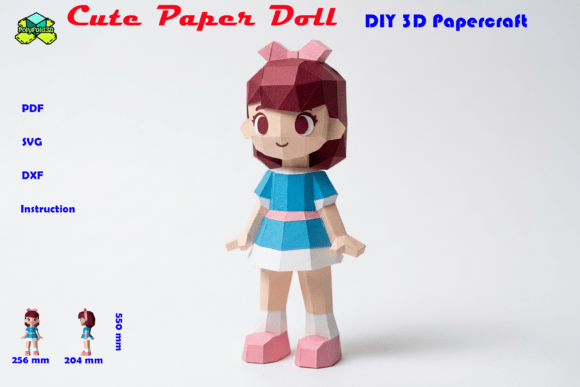
Cute Paper Doll DIY 3D Papercraft: A Comprehensive Guide to Low-Poly Geometric Sculptures
The world of papercraft has evolved significantly from simple flat cutouts into complex, three-dimensional engineering marvels. Among the most popular trends in recent years is the Cute Paper Doll DIY 3D Papercraft, specifically those featuring low-poly geometric designs. These models offer a unique intersection of modern digital aesthetics and traditional handcrafting skills. For adult crafters aged 20 to 50, these projects provide more than just a pastime; they offer a meditative assembly process and a tangible result that serves as sophisticated home décor or a thoughtful, handmade gift.
This article explores the nuances of creating low-poly paper dolls, comparing them with other papercraft styles, evaluating the tools required, and helping you decide if this specific format aligns with your crafting goals. Whether you are a seasoned modeler or a curious beginner, understanding the tradeoffs involved in DIY Low Poly Cute Paper Doll 3D Papercraft Template Printable Paper Sculpture projects will ensure a satisfying experience.
Understanding the Low-Poly Aesthetic
Low-poly art is characterized by its use of polygons—typically triangles and quadrilaterals—to create faceted surfaces. When applied to a human figure or doll, this style abstracts organic curves into sharp, clean edges and flat planes. The resulting Cute Paper Doll DIY 3D Papercraft model is strikingly modern. It relies on geometry rather than realistic shading or texture to convey form.
What makes this distinct from traditional paper dolls is the dimensionality. Traditional paper dolls are two-dimensional silhouettes designed for dressing up. In contrast, the 3D papercraft version requires spatial reasoning, precision cutting, and strategic gluing to transform flat sheets into a standing sculpture. The "cute" aspect often comes from the stylized proportions—large heads, simplified features, and vibrant colors—which soften the rigid geometric structure, making it approachable and charming.
Evaluating Difficulty and Time Investment
One of the primary concerns for any crafter is the time commitment. The difficulty level for a standard low-poly paper doll is generally classified as Medium. This places it above simple pop-up cards but below intricate architectural dioramas or highly detailed mechanical models.
- Preparation: Printing and organizing the templates can take 15–30 minutes depending on printer quality and paper weight.
- Cutting: This is the most time-consuming phase. With a finished model height of approximately 550 mm and a width of 256 mm, the surface area is substantial. Manual cutting may require several hours, while machine cutting reduces this significantly.
- Assembly: Folding along pre-scored lines and gluing tabs requires patience. Rushing this step often leads to misaligned edges or visible glue marks.
For those comparing options, it is important to note that larger models, such as those reaching 550 mm in height, require more floor space and careful handling during the final stages to prevent collapse. Smaller variants exist, but the larger size offers a more impressive display piece for office desks or shelves.
Format Compatibility: PDF vs. SVG vs. DXF
A critical decision point when purchasing or downloading a Cute Paper Doll DIY 3D Papercraft template is the file format. Modern digital downloads typically offer multiple formats to accommodate different skill levels and equipment. Understanding these differences helps you choose the right resource.
Printable PDF (A4)
The PDF format is the most universal option. It is designed for manual assembly using scissors or a craft knife. This is ideal for beginners who do not own electronic cutting machines. However, cutting small tabs and intricate polygon edges manually can be tedious and prone to human error. If you choose this route, investing in a good pair of sharp scissors and a self-healing cutting mat is essential.
SVG Cutting File
Scalable Vector Graphics (SVG) files are optimized for electronic cutting machines like Cricut. They allow for precise, consistent cuts without the risk of jagged edges common in manual cutting. If you own a Cricut Maker or Explore series, this format saves significant time and ensures that every tab fits perfectly. It is particularly beneficial for complex low-poly designs where tiny connection points must remain intact.
DXF Cutting File
DXF files are compatible with Silhouette Studio Basic Edition and other vector-based software. Like SVG, they enable machine cutting. For users invested in the Silhouette ecosystem, the DXF file is the preferred choice. It allows for easy scaling and adjustment within the software before sending commands to the cutter.
Materials and Tools Required
While the digital template is free of physical shipping, the success of your DIY Low Poly Cute Paper Doll 3D Papercraft project depends heavily on material selection. Standard printer paper (80 gsm) is often too flimsy to hold the 3D structure, especially for a model that is over half a meter tall. The paper may warp or tear at the joints.
Recommended Materials:
- Paper Weight: Use cardstock between 160 gsm and 200 gsm. This provides enough rigidity to stand upright while remaining flexible enough to fold sharply.
- Adhesive: PVA glue (white school glue) or a fine-tip gel pen adhesive works best. Avoid hot glue guns, which can melt thin paper or leave bulky blobs that disrupt the sleek low-poly aesthetic.
- Folding Tool: A bone folder or the blunt edge of a butter knife helps create crisp, professional-looking creases.
- Cutting Surface: A self-healing mat protects your workspace and ensures clean cuts.
Comparison with Alternative Craft Options
When exploring creative hobbies, the Cute Paper Doll DIY 3D Papercraft competes with other popular categories such as origami, resin casting, and digital 3D printing. How does it stack up?
vs. Origami
Origami uses a single sheet of paper without cutting or gluing. While elegant, origami figures are often smaller and limited in anatomical complexity. Low-poly papercraft allows for larger scales and more dynamic poses because it utilizes multiple pieces joined together. However, origami is cleaner (no glue) and requires less preparation time.
vs. Resin Casting
Resin crafts produce durable, waterproof figurines. They are superior for longevity and handling. However, resin work involves toxic chemicals, long curing times, and expensive molds. Papercraft is non-toxic, inexpensive, and allows for infinite design variations without buying new molds. The tradeoff is durability; paper models are fragile and sensitive to humidity.
vs. 3D Printing
3D printing offers high precision and durability. Yet, it requires access to a printer, filament costs, and post-processing (removing supports, sanding). Digital papercraft templates offer the visual appeal of 3D design with the tactile satisfaction of manual assembly. Furthermore, you can customize colors and patterns easily by changing the print settings, whereas 3D printed objects are limited by filament availability.
Best-Fit Situations and Limitations
Is the Cute Paper Doll DIY 3D Papercraft right for you? Consider the following scenarios.
It is an excellent choice if:
- You enjoy structured, step-by-step instructions that guide you through a logical process.
- You want a decorative item that looks modern and artistic but don’t have the budget for custom sculptures.
- You have access to a cutting machine (Cricut/Silhouette) and want to leverage technology for efficiency.
- You are looking for a mindful, screen-free activity that results in a tangible accomplishment.
Consider an alternative if:
- You prefer instant gratification. Assembly takes hours, not minutes.
- You need a durable toy for young children. Paper models are delicate and contain small parts.
- You lack adequate lighting and workspace. Precision cutting requires good visibility and a stable surface.
Maximizing the Final Result
To achieve the stunning 3D effect described in product listings, attention to detail is paramount. The "clean polygon surfaces and sharp edges" mentioned in template descriptions only appear if the folds are crisp and the alignment is perfect. Before applying glue, score all fold lines lightly with a dry tool. This prevents the paper from cracking and ensures the angles meet correctly.
Additionally, consider the display context. Because these models are lightweight, they may tip over if placed on uneven surfaces. Adding a small amount of weight to the base or using double-sided tape to secure it to a shelf can enhance stability. For a gallery wall effect, many crafters mount their completed paper dolls onto foam board backing, turning the sculpture into a framed art piece.
Conclusion
The Cute Paper Doll DIY 3D Papercraft represents a compelling option for crafters seeking a blend of modern design and traditional skill. Its medium difficulty level makes it accessible yet engaging, while the availability of multiple file formats (PDF, SVG, DXF) ensures compatibility with various workflows. By understanding the material requirements and comparing it against alternatives like origami or resin, you can make an informed decision that fits your lifestyle and creative goals. Whether used for personal decoration or as a unique gift, assembling a low-poly paper doll offers a rewarding escape into the world of geometric artistry.