Crafting Dimensional Storytelling: The Strategic Value of the 3D Fishing Scene Shadow Box Layer SVG in Modern Design Workflows
In the rapidly evolving landscape of digital fabrication and handmade commerce, the distinction between a simple cutout and a finished decorative piece lies entirely in depth. For professionals, creators, and entrepreneurs operating within the maker economy, the ability to produce high-value, multi-dimensional products from flat vector files is no longer just a technical skill—it is a competitive advantage. Among the most compelling tools available today is the 3D Fishing Scene Shadow Box Layer SVG, a design template that exemplifies how layered vector art can transform static imagery into immersive, tactile experiences.
This article explores the intersection of technology, aesthetics, and market demand, analyzing why this specific fishing scene template has become a staple for those looking to elevate their product offerings. By understanding the mechanics behind multilayered SVGs, creators can better serve clients who seek unique, nature-inspired decor that resonates on an emotional level.
Understanding the Mechanics of Multilayer Vector Art
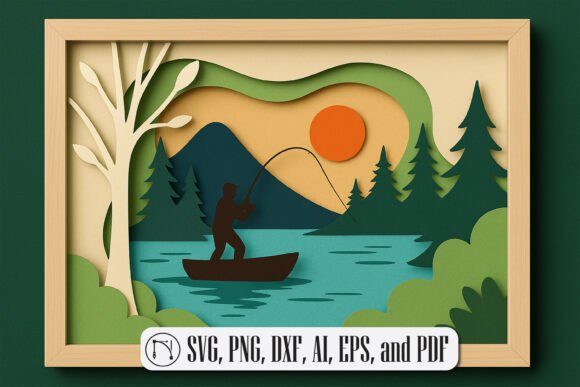
To appreciate the utility of the 3D Fishing Scene Shadow Box Layer SVG, one must first understand the shift from single-plane cutting to volumetric design. Traditional vinyl cutting or basic laser engraving often results in flat surfaces. However, shadow box designs utilize z-axis depth to create illusionary space. This particular template features five cleanly separated layers, each serving a distinct narrative function within the composition.
The design typically includes a background layer depicting a glowing sunset, followed by mid-ground elements such as distant mountains and layered trees. The foreground introduces a peaceful fisherman in a boat, anchored against the water. When these layers are physically separated and spaced using foam spacers or specialized frames, the eye perceives a cohesive three-dimensional environment. This technique, known as parallax scrolling in physical form, allows light to interact with the object differently depending on the viewer’s angle, adding a dynamic quality to home decor.
The Technical Advantage of Included Formats
For freelancers and small business owners, versatility is key. The inclusion of multiple file formats—SVG, PNG, DXF, AI, EPS, and PDF—ensures compatibility across a wide spectrum of hardware. Whether you are running a Cricut Explore, a Silhouette Cameo, or a high-powered CO2 laser cutter, the vector paths provided in the SVG and AI files ensure precision. Meanwhile, the DXF format remains essential for industrial-grade laser software like AutoCAD or LightBurn, allowing manufacturers to scale the design without losing resolution. This cross-platform readiness reduces friction in the production workflow, enabling creators to pivot between different machine types based on material availability or client requirements.
Market Trends: The Rise of Biophilic and Narrative Decor
The popularity of this fishing scene template is not accidental; it aligns perfectly with broader consumer trends toward biophilic design and narrative-driven interiors. In an era where remote work has redefined living spaces, homeowners are increasingly seeking decor that evokes tranquility, escape, and connection to nature. A fishing scene, with its inherent symbolism of patience, solitude, and natural beauty, taps into a psychological desire for calm amidst chaos.
Marketers and interior designers are noting a shift away from mass-produced, generic wall art toward pieces that tell a story. A multilayer shadow box does more than hang on a wall; it creates a focal point that invites contemplation. The layered trees and mountains provide context, while the fisherman provides a human element, grounding the scene in relatable activity. This emotional resonance drives higher perceived value, allowing creators to command premium prices for what is essentially a paper or wood craft project.
Why Consumers Are Paying Attention
Consumers are becoming more discerning about the origins and craftsmanship of their goods. There is a growing rejection of fast furniture and disposable decor in favor of items that feel curated and intentional. The 3D Fishing Scene Shadow Box Layer SVG appeals to this sensibility because it mimics the complexity of hand-assembled art. Even when produced digitally, the final product retains the warmth and texture associated with traditional papercraft or woodworking. This blend of digital precision and analog charm satisfies the modern consumer’s dual desire for efficiency and authenticity.
Workflow Optimization for Creators and Entrepreneurs
For professionals managing a creative business, time is the most scarce resource. The structured nature of this five-layer design offers significant operational benefits. Unlike complex scenes that require intricate manual assembly, this template is designed for ease of cutting and assembly. The clear separation of layers means that nesting in cutting software is straightforward, minimizing material waste—a critical factor when working with expensive woods or specialty papers.
Furthermore, the modularity of the design allows for customization. Entrepreneurs can experiment with different materials for different layers to enhance the visual impact. For instance, using translucent vellum for the sunset layer can create a glowing effect when backlit, while solid basswood for the tree layers adds structural contrast. This flexibility encourages innovation within a standardized framework, allowing businesses to offer personalized variations without reinventing the wheel for every order.
Scalability Across Product Lines
The adaptability of this SVG extends beyond single-piece decor. It serves as a foundational asset for various product lines:
- Gift Sets: Combine the shadow box with matching coasters or bookmarks featuring simplified versions of the same layers, creating a cohesive brand experience.
- Seasonal Collections: Swap out the sunset colors for autumn tones or winter palettes, leveraging the same structure to refresh inventory without new design costs.
- Educational Kits: Sell the raw materials and instructions as DIY kits for hobbyists, tapping into the growing market for at-home crafting education.
Integrating Technology and Tradition
The use of the 3D Fishing Scene Shadow Box Layer SVG highlights a fascinating convergence of technology and tradition. While the cutting is done by machines, the aesthetic outcome honors centuries-old techniques of shadow puppetry and diorama making. This synergy is particularly relevant for makers who wish to position themselves at the forefront of "smart crafting." By leveraging advanced file formats like SVG, which retain mathematical precision, creators ensure that their traditional artistic visions are executed with modern accuracy.
Moreover, the accessibility of these files democratizes high-end design. Previously, creating such intricate layered scenes required skilled artisans with years of experience. Today, a novice crafter equipped with a Silhouette machine and this template can produce a result that rivals professional studio work. This lowers the barrier to entry for aspiring entrepreneurs, fostering a more vibrant and diverse creator economy.
Practical Considerations for Assembly and Display
While the digital aspect is crucial, the physical execution determines the final success of the product. When assembling the fishing scene, attention to spacing is paramount. Too little depth, and the layers merge into a muddy silhouette; too much, and the perspective breaks. Professional creators often recommend testing with scrap material before committing to final stock. Additionally, the choice of frame matters. Deep-set shadow boxes with UV-protective glass are ideal for preserving the integrity of the materials, especially if displaying near windows where sunlight could fade the vibrant sunset hues over time.
Lighting also plays a role in enhancing the 3D effect. Incorporating LED strips behind the sunset layer can dramatically alter the mood of the piece, shifting it from a daytime scene to a serene evening vista. This capability for transformation adds another layer of value, appealing to tech-savvy consumers who enjoy interactive or adaptable decor.
Conclusion: Elevating Craft Through Intentional Design
The 3D Fishing Scene Shadow Box Layer SVG is more than just a collection of vector paths; it is a tool for storytelling and a catalyst for business growth. It represents a shift in the creative industry toward products that offer depth, both literally and figuratively. For professionals and enthusiasts alike, mastering the use of multilayer templates allows for the creation of decor that is not only visually stunning but also emotionally resonant.
As we move forward, the integration of precise digital files with tangible, hands-on assembly will continue to define the standard for quality in the maker market. By embracing designs that facilitate this process, creators can meet the growing consumer demand for meaningful, beautifully crafted objects. Whether you are a seasoned entrepreneur scaling your operation or a freelancer exploring new niches, leveraging the potential of layered SVGs like this fishing scene offers a strategic path to differentiation and success in a crowded marketplace.
In conclusion, the value of this template lies in its ability to bridge the gap between digital convenience and analog beauty. It empowers creators to deliver exceptional experiences, proving that even in a digital age, the power of physical depth and thoughtful design remains unmatched.