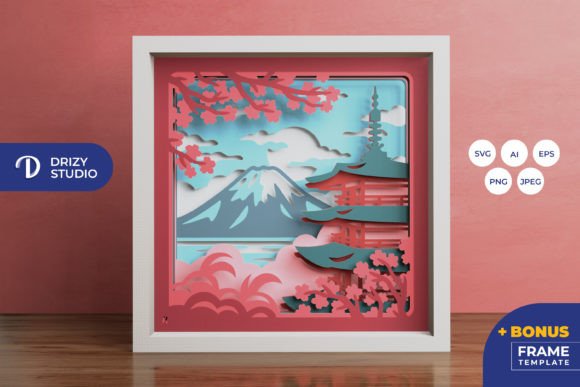
Mount Fuji Japan 3D Shadow Box
In a digital landscape saturated with ephemeral content, physical artifacts that demand attention and interaction hold unique strategic value. The Mount Fuji Japan 3D Shadow Box is not merely a craft project; it is a tangible representation of precision, cultural symbolism, and layered storytelling. For entrepreneurs, designers, and creative professionals, integrating such high-quality physical assets into branding, office environments, or client gifts can significantly enhance perceived value and emotional connection. This analysis explores the practical applications, strategic benefits, and operational considerations of utilizing this layered paper-cutting template to achieve better results in communication and branding.
Understanding the Asset: Precision Meets Aesthetics
The Mount Fuji Japan 3D Shadow Box is defined by its structural complexity and visual depth. It consists of an eight-layer square paper-cutting template designed to create a three-dimensional effect when assembled. The inclusion of multiple file formats—AI, EPS, PNG, SVG, and JPEG—ensures compatibility across various professional workflows. Specifically, the SVG file is optimized for cutting machines like Silhouette and Cricut, while the high-resolution JPEG (3000 x 2000 px) serves as a detailed preview for design planning.
From a production standpoint, the template is scaled to 714 x 714 px for vector editing and results in a final assembled size of 20.32 x 20.32 cm. This specific dimension is critical for space planning. Whether intended for a desk display, a wall-mounted frame, or a lightbox installation, understanding these constraints allows decision-makers to allocate resources accurately. The ability to resize the SVG while maintaining aspect ratio provides flexibility, but it also requires careful calculation to ensure the final output aligns with spatial limitations.
Strategic Applications in Branding and Communication
Why invest time and resources into assembling a physical shadow box? The answer lies in the psychology of tactile engagement. In an era where most brand interactions are screen-based, a physical object commands focus. The Mount Fuji Japan 3D Shadow Box serves as a powerful tool for:
- Office Culture and Morale: Assembling complex crafts can be a team-building activity that fosters collaboration and mindfulness. The process requires patience and attention to detail, qualities that translate directly to professional excellence.
- Premium Gifting: Sending a handmade, intricate item to clients or partners signals effort and care. Unlike mass-produced merchandise, a custom-assembled shadow box demonstrates that you have invested personal labor into the relationship.
- Visual Storytelling: Mount Fuji is a globally recognized symbol of resilience, beauty, and balance. Incorporating this imagery into your workspace or marketing materials subtly communicates these values without explicit verbalization.
- Creative Inspiration: For educators and creatives, the finished piece serves as a focal point for discussion regarding design principles, layering techniques, and cultural appreciation.
Operational Workflow and Decision-Making
Successfully deploying the Mount Fuji Japan 3D Shadow Box requires a structured approach. Random assembly often leads to misalignment, wasted materials, and frustration. Instead, treat the process as a small-scale manufacturing project.
1. Preparation and Tool Selection
Your choice of tools dictates the quality of the outcome. If you possess a cutting machine (Silhouette, Cricut), utilize the included SVG file to ensure clean, precise cuts. This reduces post-processing time and ensures uniformity across all eight layers. However, if manual cutting with an art knife or scissors is necessary, prioritize sharp blades and a steady hand. Inconsistent edges will detract from the 3D illusion. Select high-quality cardstock or specialized shadow box paper; thin paper may collapse under the weight of multiple layers, while overly thick paper may prevent proper adhesion.
2. Assembly Strategy
The core mechanism of this product is layering. Each cut represents a distinct plane of depth. To maintain alignment:
- Label Your Layers: Before cutting, mark each layer clearly. Confusion between similar shapes is a common error.
- Test Fit: Assemble the layers dry (without glue) first. Check for overlaps and gaps. Adjust spacing if necessary.
- Adhesive Choice: Use double-sided tape for a cleaner look and consistent spacing, or liquid glue for permanent bonding. Ensure adhesive does not seep through thin paper sections, which can cause warping.
3. Lighting Integration
The product description mentions the option to create a "Japan 3D Light Box" by adding LED strips between layers. This transforms the object from a static decoration into a dynamic light source. Strategically, this adds significant visual impact for evening displays or retail environments. However, consider heat management and power sources. Ensure the LED strips are low-heat to prevent damage to the paper and plan for discreet wiring to maintain aesthetic integrity.
Risks and Mitigation Strategies
While the potential rewards are high, there are risks associated with improper implementation. Understanding these pitfalls helps in making informed decisions.
Time Mismanagement: Assembling an eight-layer intricate design can take several hours. For busy professionals, this may not be feasible. Mitigate this by scheduling dedicated "deep work" time or delegating parts of the assembly to junior staff or interns as a training exercise.
Quality Control: Variations in paper color and lighting can alter the final appearance. The preview images are for reference only. Order test samples of paper stock before committing to large batches if using this for corporate gifting. Inconsistencies in material quality can undermine the premium feel of the final product.
Misaligned Expectations: Do not assume the final product will match digital previews exactly. Paper texture, ambient lighting, and assembly precision all contribute to the final look. Communicate these variables to stakeholders to manage expectations.
Long-Term Value and Sustainability
Investing in the Mount Fuji Japan 3D Shadow Box is not just about creating a single object; it is about cultivating a mindset of craftsmanship. In a world of disposable digital content, physical artifacts endure. A well-made shadow box can become a lasting part of an office’s identity or a cherished family heirloom.
Furthermore, the modular nature of the template allows for creativity. Once mastered, users can experiment with different color palettes, lighting schemes, or even modify the SVG files to incorporate company logos or specific messages. This adaptability extends the lifecycle of the asset, allowing it to evolve with changing brand needs or seasonal themes.
Conclusion: Intentional Creation
The Mount Fuji Japan 3D Shadow Box offers more than just a decorative end-product. It provides a framework for practicing precision, patience, and creative problem-solving. By approaching the assembly process strategically—selecting the right tools, planning the workflow, and considering the final context—you can transform a simple paper-cutting template into a powerful tool for branding, team building, and personal satisfaction.
For those seeking to add depth to their physical environment and demonstrate a commitment to quality, this layered design is a compelling choice. It bridges the gap between traditional craftsmanship and modern digital design, offering a tangible result that resonates on both an aesthetic and emotional level. Make your own, make it count, and let the layers speak to your dedication to excellence.